
The short answer: you stop being poor by breaking the psychological traps of scarcity, avoidance, and short-term bias – and replacing them with structured, evidence-based habits that pull you toward high-value work.
Now, let me be honest. There’s an old rule of persuasion: mix truth with just enough spin to get buy-in. As a marketer, I know that game inside out. But I also respect my audience – you’re sharper than most think, and I won’t sugarcoat it. These are my real insights, drawn from money psychology and years of watching how people (including myself) get caught in cycles.
Yes, some business owners will hate what I’m about to say. Because many are comfortable with employees who trade stability for low pay, and it is their responsibility to protect and provide for those people. But if you’re reading this, you’re different. You want out of the loop. You want leverage, not scraps. And the path forward begins with understanding how your brain has been trained since school to chase safe approval instead of bold rewards.
Table of Contents
Why smart people get stuck
You’re talented, skilled, and hungry for growth, but your bank account tells a different story. Instead of landing big clients or high-ticket projects, you find yourself taking low-paying jobs that drain time and energy. It feels like being trapped in a hamster wheel: the harder you run, the less progress you make.
The truth is, this isn’t a lack of talent. It’s psychology. Scarcity, anxiety, and uncertainty quietly hijack your brain, steering you toward short-term survival instead of long-term wealth. The result: a cycle of exhaustion, small paychecks, and missed opportunities.
Here’s why the loop is so powerful and how research-backed strategies can break it.
The psychology of the low-pay loop
From the time we’re in school, we’re trained to chase “safe rewards” – get good marks, follow the rules, stay inside the system. That conditioning makes us risk-averse and obsessed with immediate approval. Later in life, the same wiring keeps us stuck: we grab small, certain paychecks instead of reaching for bigger, uncertain opportunities. Scarcity, anxiety, and uncertainty simply amplify what the system taught us – to play it safe, even when it keeps us broke.
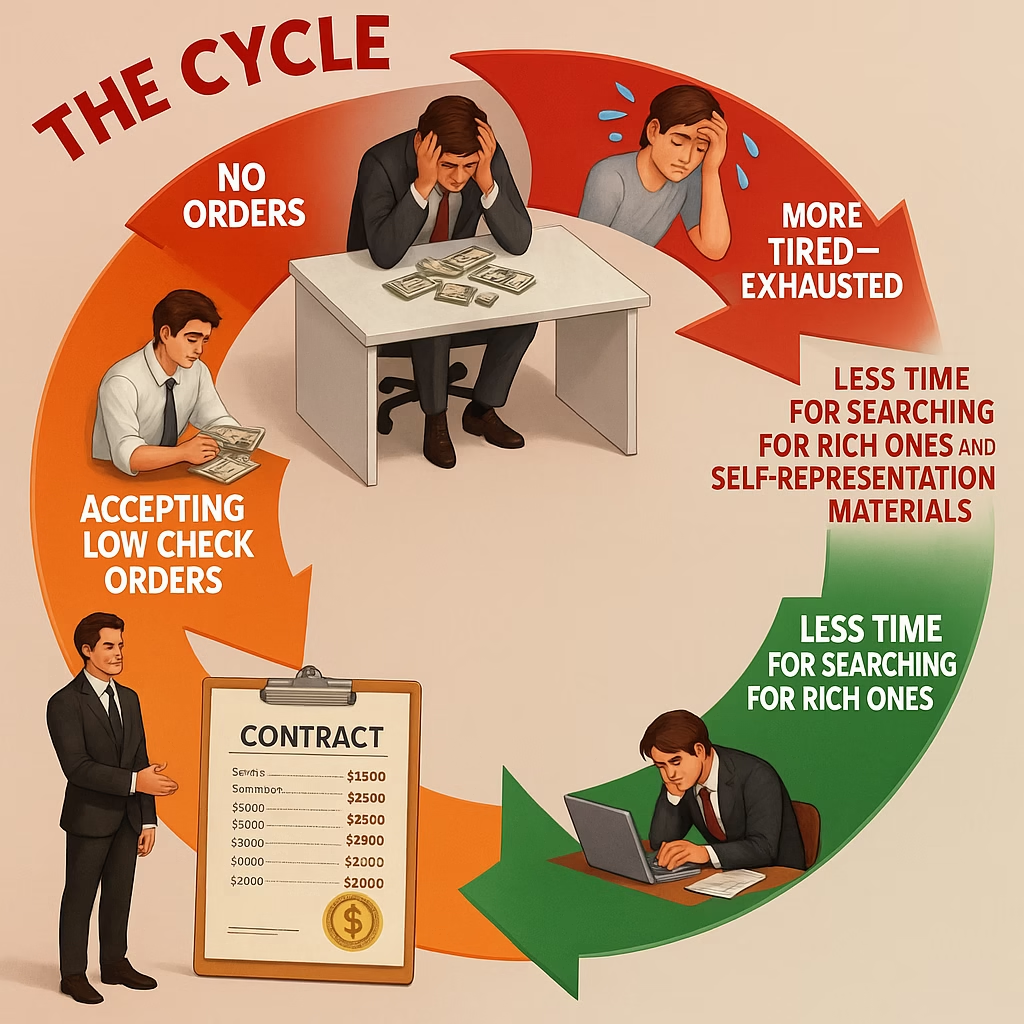
Reasons for staying poor
- Scarcity hijacks attention. When money is tight, worries about bills and near-term survival “tunnel” your attention, taxing working memory and executive control. That cognitive tax makes long-horizon actions harder (prospecting, portfolio positioning, skills building) and nudges you to grab any small job that is immediately available. ScienceDirect+3PubMed+3American Psychological Association+3
- Anxiety breeds avoidance. High-stakes prospects (enterprise clients, big retainers) trigger a performance threat. The fastest way to feel better is to avoid the threat, which momentarily reduces anxiety but keeps the cycle alive: fewer bold pitches, more small tasks. Avoidance is a primary maintenance mechanism of anxiety disorders; exposure to feared situations is the corrective treatment. PMC+1
- Uncertainty feels intolerable. Bigger deals come with waiting, ambiguity, and negotiation risk. People with higher intolerance of uncertainty (IU) worry more and default to controllable, low-value work. IU is a robust transdiagnostic driver of anxiety and is modifiable in therapy. PMC+1
- Present bias under pressure. Under hardship, many people “discount” the value of delayed rewards, preferring smaller, sooner payouts. That tilts decisions toward quick, low checks and away from longer sales cycles and assets (case studies, website, demo deck). ScienceDirect+1
Resulting loop: scarcity → attentional tunnelling → anxiety/uncertainty → avoidance → low-pay work → more scarcity. This is a psychological trap, not a character flaw. DNB Portal
Psychological explanation of poor circles
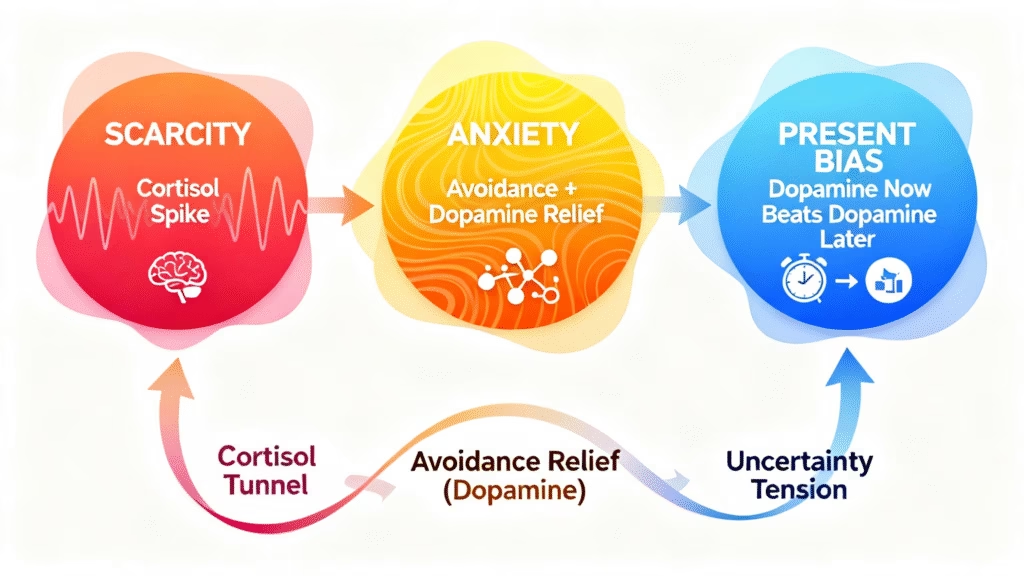
The problem isn’t character – it’s biology. Here’s what happens in your body during the low-pay loop:
- Scarcity stress → Cortisol spike
When bills pile up, your brain releases cortisol. High cortisol narrows attention (“tunneling”), locking focus on immediate survival instead of long-term growth. Executive control drops. That’s why you grab quick jobs instead of building systems. - Anxiety → Avoidance → Dopamine relief
Facing a big client triggers a performance threat. You feel cortisol again, your body preparing for danger. Avoidance gives temporary relief – a small dopamine hit – which tricks your brain into thinking you “solved” the threat. But the price is missed opportunity. - Uncertainty → Cortisol tension + dopamine craving
Bigger deals mean waiting, ambiguity, and negotiation. Your nervous system hates the unknown, so cortisol stays elevated. To escape, your brain chases the fastest dopamine path: easy, controllable tasks (low-pay gigs, busywork). - Present bias → Dopamine now beats dopamine later
Stress skews your reward system. Under pressure, dopamine signals make small-sooner rewards (C$100 today) feel more satisfying than bigger-delayed ones (C$3,000 in 30 days). That’s how you trade high-ticket pipeline work for low-ticket survival jobs.
This is the biological circle:
Scarcity → cortisol tunnel → avoidance relief (dopamine) → uncertainty tension → quick dopamine from low pay → more scarcity.
How to break the loop: change perceptions first, behaviours second
Change Circle
Breaking free isn’t just about learning a new habit – it’s about rewiring a pattern that may have been trained into you for years. That takes real power. If you’ve spent a decade chasing safe approval and small paychecks, your brain will resist change at every step.
The fastest way to shift is to change not only your thinking but also your environment. Surround yourself with people who earn more, who act boldly, and who don’t carry the same fears. This matters more than most realise. Even your closest friends or partner can have completely different perceptions about money. They are not your enemies – and it doesn’t mean you need to cut ties – but choose carefully who you discuss money and ambition with.
Feed your brain with positive input: conversations with people who think bigger, books and podcasts that normalise wealth, and mentors who remind you that discomfort is a sign of growth. Your environment will either anchor you in the loop or pull you out of it.
Reframe the risk signal
- Name the mechanism, not the story. “This is avoidance driven by IU and tunnelling, not proof I’m ‘not ready’.” Labelling the process reduces reactivity and creates a choice point. PMC
- Adopt “discomfort = data.” Anxiety is a marker of growth exposure, not a stop sign; exposure is the treatment.
Most people think fear means “I’m not ready.” That’s the story. But in reality, fear is often just a brain mechanism firing: anxiety, uncertainty, and survival mode. If you call it by name – “this is avoidance, this is tunnelling” – you take the sting out of it. Suddenly it’s not a verdict about you, it’s just a process happening in your brain.
Then flip the meaning: instead of “fear = stop,” treat it as “fear = data.” Anxiety means you’re stepping into growth. Just like muscles ache when they’re getting stronger, discomfort is the signal that you’re training a bigger game.
Practical tip: Next time you feel anxious before sending a proposal or pitching a client, literally say out loud:
“This is just avoidance. Discomfort means I’m on the right path.”
Then press send.
Use exposure, but make it graded
Create a 4-step exposure ladder to the exact things you avoid (e.g., pitching higher-budget clients).
Example ladder for sales fear:
- Write 10 short pitches to friendly warm leads.
- Send 5 to mid-tier prospects.
- Book 3 discovery calls with enterprise prospects.
- Present 1 formal proposal with a clear price anchor.
Practice until anxiety drops by half at each rung; then go up. This is straight from exposure principles that reduce avoidance and fear. PMC+1
Find where your high-pay clients are and what they need to see
If you want to break the loop, you can’t just “work harder” – you need to work smarter by targeting the right clients. High-pay clients aren’t hiding; they’re just looking in different places than low-pay ones. Start by defining your ideal buyer: industry, budget range, pain points, and decision-makers. Then ask yourself, “What proof do they need to trust me?” That could be case studies, a polished proposal kit, or a clear price anchor.
Once you know where they are (LinkedIn, industry forums, niche communities, referrals), create a simple outreach sequence. It doesn’t need to be perfect – it needs to be consistent. From my own business development work, I can assure you: if you send 10 targeted, well-positioned pitches, at least 1 will convert. That’s the math of leverage.
Quick tip: Build an A-list of 50 potential high-pay clients. Commit to contacting 2 every morning before touching any low-pay work.
Lock intentions to triggers
Turn vague goals into implementation intentions: “If it’s 09:30, then I send two enterprise-level pitches from my A-list.” These “if-then” plans reliably improve goal execution with medium-to-large effects in meta-analyses. PMC+2PMC+2
Most people set vague goals like “I’ll do more outreach this week.” The problem is, your brain skips them when stress or distractions appear. That’s why you need implementation intentions – clear if-then rules that tie your action to a trigger.
Example: “If it’s 09:30, then I send two pitches to high-paying clients from my A-list.”
This way, the decision is already made. You don’t waste willpower debating; you just follow the rule. Studies show this method makes people far more likely to follow through because the brain treats it like an automatic habit instead of a choice.
Quick tip: Pick one daily trigger (time, place, or event) and tie it to your most important money action. For example:
- If I finish my coffee, then I open my proposal kit.
- If it’s 14:00, then I book a discovery call.
Lower cognitive load on “rich-client” actions
Scarcity reduces bandwidth; compensate by removing friction:
- Keep a proposal library: 3 priced packages, proof points, and a one-page case study template.
- Build a prospect A-list of 50 targets with decision-maker emails and a 3-touch sequence.
- Use a daily prospecting window during your peak energy and protect it with a calendar hold. These are bandwidth-protection moves that counter tunneling. American Psychological Association+1
Train tolerance for uncertainty
Big clients and bigger deals always come with waiting, silence, and negotiation risk. If you panic in those moments, you’ll sabotage yourself by lowering prices, over-explaining, or running back to small jobs. The way to fix this is to practice uncertainty on purpose – in small, controlled steps.
What to do:
- Quote a firm price and stop talking. Don’t justify, don’t pile on extras. Say the number and leave silence.
- Wait 48 hours for replies without chasing. If you usually send a discount or follow-up too fast, force yourself to sit in the discomfort.
- Practice ambiguity in small ways. Example: send a pitch without attaching every detail. Let the client ask.
- Add one new “uncertainty drill” each week. The more often you expose yourself, the less threatening it feels.
Over time, your brain learns that silence or risk doesn’t equal danger – it’s just part of business. Research shows intolerance of uncertainty (IU) drops with practice, making you calmer and sharper under pressure. ScienceDirect
Guardrails that neutralise present bias
- Income floor: set a monthly minimum price and number of high-ticket pitches. If unmet by day 20, pause all low-pay work and allocate time to the pipeline only.
- Delayed-reward sweeteners: tie immediate micro-rewards to long-term actions (e.g., after every 3 enterprise pitches, take a 30-minute break you enjoy). This counters present bias while you build the habit. ScienceDirect
From Author
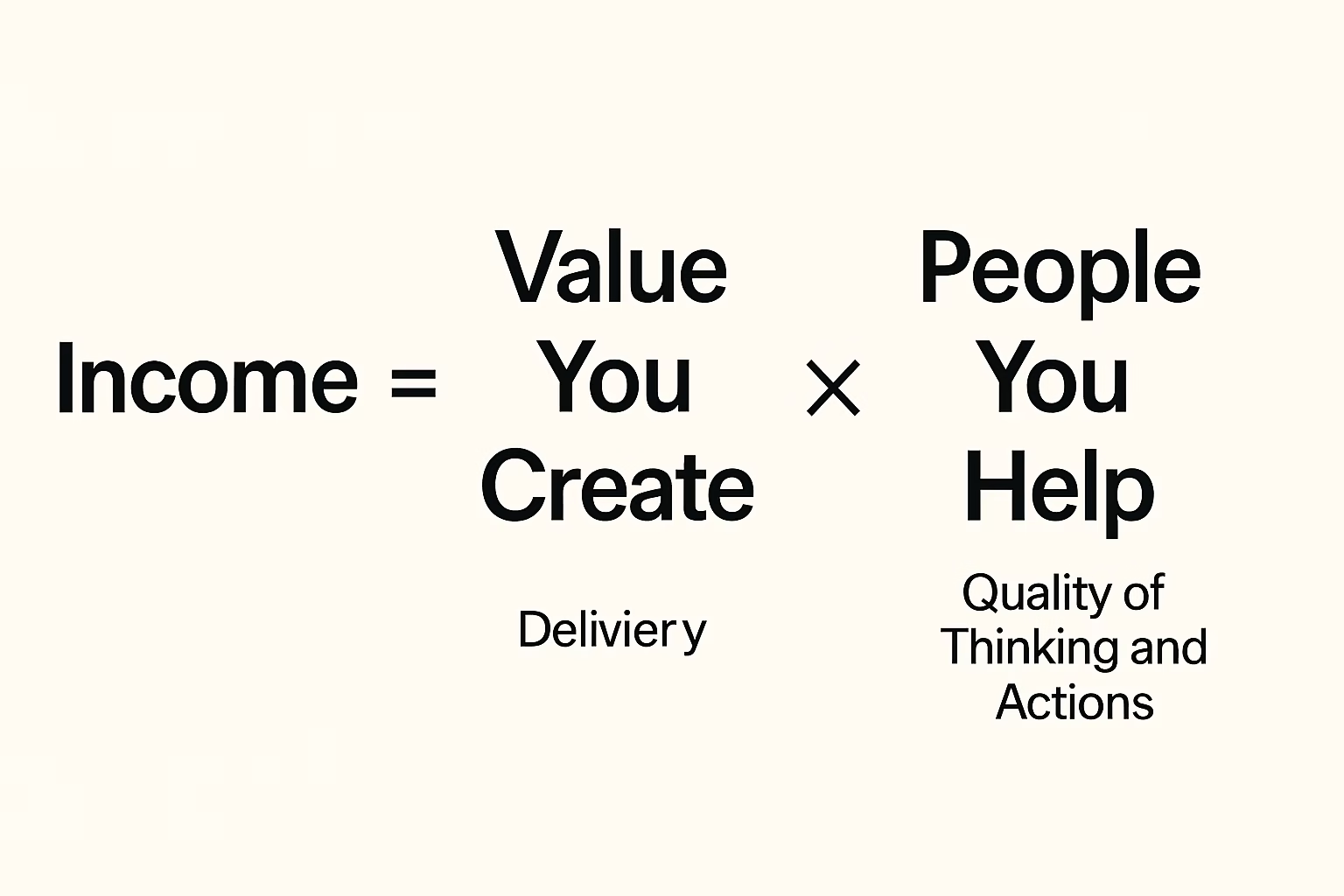
The KKM principle: quality + quantity + mindset
A simple but powerful success formula is often expressed as:
Income = Value you create × Number of people you help × Quality of your thinking and actions.
This idea, highlighted by thinkers like Brian Tracy and Jim Rohn, shows that income is not random. It comes from three levers you can control. First, increase the value of what you deliver. Second, expand the number of people who benefit from it. Third, sharpen the mindset and actions you bring to the process.
What does this give you? Clarity. Instead of chasing shortcuts, you see exactly where to put your energy. Improve even one lever and your results grow. Improve all three, and your growth compounds.
Success formula: quality, quantity, and mindset
Real success in business is rarely about one factor – it’s a combination of quality of service, quantity of delivery, and the mindset you bring to every client interaction. This formula is simple but powerful: deliver top value, deliver consistently, and think like a partner instead of just a provider.
In my own project management, I’ve applied this in a very practical way:
- I bring structure, control, and the best delivery for the best price.
- I take on no more than 2–3 projects at a time, ensuring focus and excellence.
- I balance this with a long-term project (a B2C application) that builds future profit.
The conclusion: service and product can look very different, but the principle stays the same. My personal approach is to act as a problem solver, a giver, and a highly responsible partner. I combine strong analytical thinking with communication skills – meaning that if something goes wrong in a project, I don’t abandon it; I fix it. On top of that, I bring a business-oriented perspective: I never follow empty scripts and I always consider the client’s financial reality.
Recommendation: Think about which qualities you already have. Are you disciplined? Adaptive? A communicator? Success comes not just from what you sell, but from the mindset and reliability you attach to your service.
A 30-day protocol you can run
In reality: what to do in 30 days
- Week 1 – Get ready
Audit your last 20 tasks (low-pay vs. leverage). Write 2 simple if-then rules for outreach. Prepare your proposal kit (packages + case studies). Don’t forget to analyse who your customers are and what they want to see. You’ll find it on their website, in their service descriptions, or on social media, where they often share pain points. This article about how to make a selling website structure may help you. - Week 2 – Face the fear
Start with small outreach (warm leads). Track anxiety 0–10 before and after. Move up once it drops. - Week 3 – Practice uncertainty
Quote firm prices. Wait for replies without chasing. Cut obvious time-wasters (social feeds, cheap gigs). - Week 4 – Scale
Pitch bigger clients. Track key metrics (pitches, calls, proposals, deal size). Cut low-pay work by half. Strengthen brand visibility: if you want passive clients, there are only two ways – recommendations or people finding your work online. Always share what you’ve done, from case studies to wins.
Expect this:
- More anxiety at first (normal).
- By Week 4: outreach feels easier, proposals faster.
- By 8–12 weeks: win rate goes up because you’re pitching ore of the right clients, not because fear disappears.
In short: Audit → Outreach → Tolerate silence → Scale → Stay visible.
Scripts to reduce avoidance in the moment
- Reframe script (10 seconds): “This anxiety is IU plus tunnelling. My job is to feel it and send the pitch.” PMC
- Price anchor: “For outcomes like X and Y, my standard engagement is C$6,000 for 6 weeks. Shall we review the scope now or book a 20-minute walkthrough tomorrow?”
- Boundary for low-pay offers: “Thanks for thinking of me. I’m currently focused on strategic engagements starting at C$3,000. If that fits, I can share options.”
What to expect
- Early weeks: Anxiety may spike as you stop avoiding. That is a success signal in exposure work; keep rungs small and repeat. PMC
- By 3–4 weeks: Outreach feels more routine; proposals speed up; IU drops; present-bias pulls weaken as larger opportunities become familiar. ScienceDirect
- By 8–12 weeks: Win rate improves mostly because volume, fit, and clarity improve, not because anxiety disappears completely.
Bottom line
People do not “choose” to stay poor; scarcity, anxiety, and uncertainty push them into short-term, low-value work. The antidote is structured exposure, if-then planning, and bandwidth-protecting systems that make the high-value path the default. This is not motivational fluff; it is how the brain learns under pressure. American Psychological Association+3PubMed+3PMC+3
What is the “low-pay loop”?
It’s a psychological cycle where scarcity and stress push you to take quick, low-paying jobs. This keeps you busy but prevents long-term growth and higher income opportunities.
How can I break out of the low-pay loop?
Start with awareness. Then apply structured steps: audit your work, set daily if-then outreach rules, practice pitching higher-value clients, and reduce low-pay work by half within 30 days.
Why does anxiety spike when I aim for bigger clients?
Because your brain reads uncertainty and risk as danger. Cortisol rises, which triggers avoidance. Exposure and repetition are what reduce this fear, not avoidance.
How long does it take to see results?
In 3-4 weeks, outreach feels easier and more routine. In 8-12 weeks, you’ll notice a better win rate, not because fear is gone but because you’ve built volume, fit, and visibility.
Do I have to cut off friends or partners who think differently about money?
No. They’re not enemies. Just be careful who you discuss money with. Surround yourself with people who already think bigger and treat their perspective as input, not opposition.
How do I get high-paying clients to find me?
Focus on brand visibility. Clients come passively in two ways: through recommendations or because they find your work online. Always share what you’ve done – case studies, wins, lessons – so people can see your value.