
HOTSTONE Ubud: a fractional membership in a Bali longevity retreat
HOTSTONE is a regenerative wellness retreat in Ubud offered as a shared-ownership membership rather than a property sale. Members hold a share in a Singapore vehicle that is linked to a specific villa through a loan agreement with the Indonesian operating company, and receive a stay entitlement plus a share of pooled accommodation revenue.
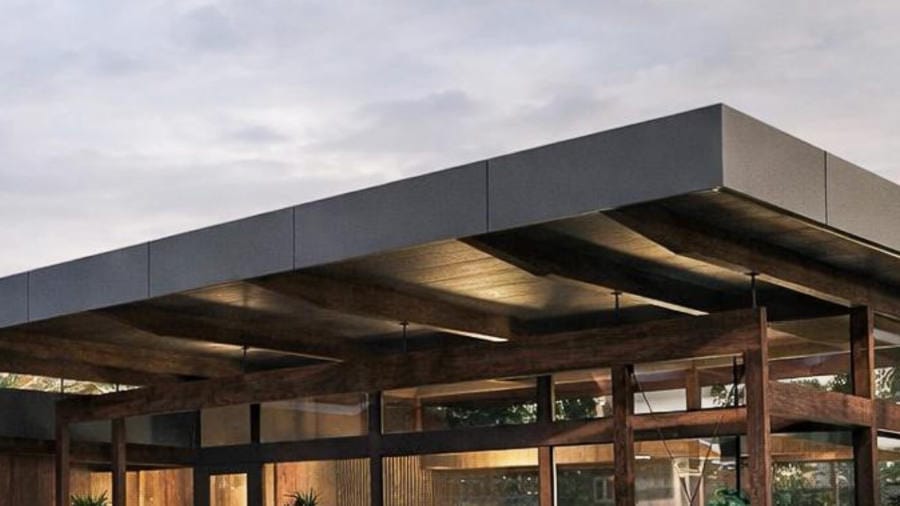
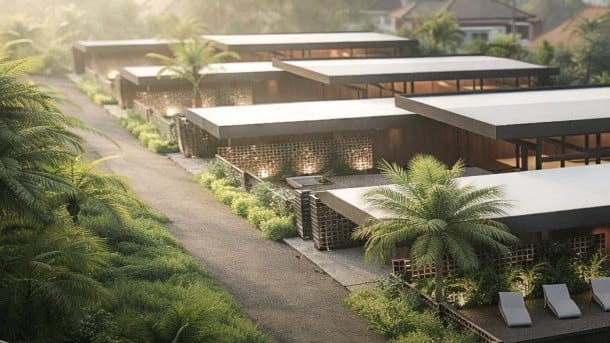
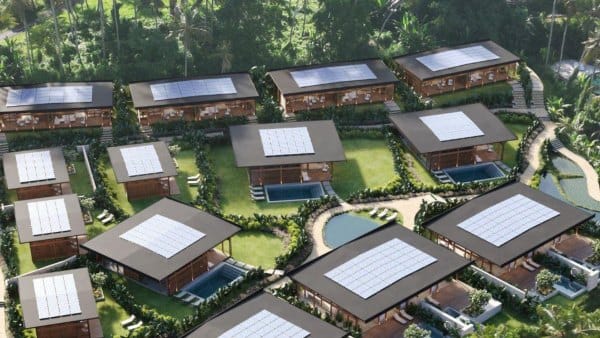

Images are the company’s own materials or its public website, reproduced as received and not verified by FinanceBeef.
How it works
- A shared-ownership membership programme, not a property purchase. The project materials state plainly that members do not hold legal title to the land or to the villa structure in Indonesia.
- Each membership is a shareholding in a Singapore special purpose vehicle. That vehicle’s claim on the Indonesian asset runs through a notarised loan agreement with the local operating company, Hot Stone Ubud PT PMA.
- Distributions are calculated from a 40 percent share of gross pooled accommodation revenue for the villa category, and paid through the Singapore vehicle in the first quarter of each year.
- Each membership carries a stay entitlement: one week per year for the 1-bedroom villa, one week every two years for the 2-bedroom villa. Members may hold several memberships and stack the entitlement.
- Unused stay time can be returned to the operator’s rental pool with three months notice, or carried forward for a maximum of one year. Bookings require three months notice and are subject to availability.
- The membership term ends on 31 July 2053, which the materials describe as the final date of the underlying leasehold.
- The process is application, KYC and verification, execution of the legal documents, payment, then issuance of the shareholding and membership documentation. It can be completed remotely.
- Members receive a shareholding document from the vehicle, a membership agreement, the notarised loan agreement structure, and monthly financial and operational reporting.
- The property is run by the operator’s own hotel management team, and the materials state there are no annual management, maintenance or service fees charged to members.
What is built
Stated by the developer in its own materials and not independently verified by FinanceBeef.
- HOTSTONE Ubud is an operating wellness retreat. The materials state it has hosted guests from around the world for more than four years.
- Developed by ELEMENTIS, which positions the site as a longevity and regenerative-health ecosystem rather than a conventional villa development.
- Two villa types. The 1-bedroom is adult only, houses up to two guests and sits within walking distance of the facilities, stated as available from January 2027. The 2-bedroom is family friendly, houses up to six guests and is a buggy ride from the facilities, stated as available from July 2027.
- Villa A, a 2-bedroom plan, is 178 m² internal and 168 m² external, 346 m² in total: a 65 m² kitchen and living room, a 27 m² master bedroom with bathroom, a 29 m² second bedroom, dressing room and storage, plus a 54 m² terrace, a 32 m² pool, a deck, a pond and covered parking.
- Stated build specification: a solar energy system on every villa, premium tropical hardwood, insulated Low-E glass, medical-grade low-toxin materials throughout, circadian lighting, sleep-focused acoustic design and the developer’s own Ice Wall technology.
- The 2-bedroom villas additionally specify a hydrogen-enriched whole-home shower system and a kitchen built for clean eating.
- Member privileges: a complimentary health check-up on arrival for the member and one accompanying guest, and 25 percent off longevity therapies, clinical diagnostics, thermal circuit sessions, food and beverage, and any accommodation beyond the included week.
- The programme is stated as limited to 180 memberships in total.
Structure at a glance
As described in the project materials. Verify independently before committing capital. Commercial terms, including any amount payable, are provided only on request.
Risks and open questions
Drawn from the project’s own documents, including several places where they contradict each other. This is the list to work through with your lawyer before anything else.
- You are not buying property. The documents say so directly: members hold no legal title to the land or the villa. What is held is a claim on a Singapore company whose link to the Indonesian asset is a loan agreement, so in substance this is a contractual and creditor position. Everything else follows from that.
- Both counterparties are effectively unnamed. The offer deck names neither the Singapore vehicle nor the Bali entity. Only the draft FAQ names an Indonesian operating company. No registration number, director or auditor is given for the Singapore vehicle, so no counterparty diligence is possible from the materials alone.
- The two documents describe your legal position differently. The FAQ says the membership carries a shareholding in the Singapore vehicle. The offer deck never says you receive shares in anything. Confirm which is correct against the executed agreements.
- The two documents disagree on the size of one membership. The FAQ states one share equals 5 percent, while the distribution model in the deck is calculated on a 10 percent share for a single allocation. Either one allocation is 10 percent, or the headline figure assumes two of them.
- The distribution wording is soft. The revenue share is described as the basis for the annual distribution calculation and is made subject to final agreements you have not seen. That is a calculation reference, not a stated obligation to pay.
- Revenue is pooled across a villa category, while the FAQ attaches economic rights to a specific villa. Those are not the same thing, and the difference decides what you actually get paid on.
- The share is of gross revenue, and no cost line is disclosed anywhere. Management fees, channel commissions, staffing, utilities, maintenance, reserves, insurance and Indonesian tax are all absent from the materials.
- The model does not appear to deduct complimentary member weeks from sellable inventory, even though every membership carries a free stay entitlement and members also receive discounts on paid services.
- The leasehold is asserted but never evidenced. No lease document, lessor identity, commencement date, original term, registration status or extension right is provided, and Indonesian lease extensions are not automatic.
- The interest is a wasting one. It ends on 31 July 2053 and no document states what a member receives at expiry. On the face of the materials, the residual value is zero.
- The villas are not built. Availability is stated from January 2027 and July 2027, and all property imagery supplied is computer rendering. There is no construction progress photograph, no site plan and no as-built drawing.
- No permits, no title reference and no professionals are named. No building permit or certificate of function, no land certificate, no architect stamp, no contractor and no notary appears in the materials, and no address, land parcel or certificate number is given.
- The four year operating history relates to the existing wellness retreat, not to the villas being offered. The documents do not confirm the villas sit on the same land, under the same licence or under the same entity.
- Exit is described inconsistently. The deck describes no resale route at all, the FAQ describes an operator-assisted resale, and elsewhere the same FAQ restricts transfer to family members. Assume no liquidity until the agreements say otherwise.
- On a sale of the business, the FAQ states a member receives the initial amount less the activation fee. As written that means no participation in any capital gain on the asset.
- Operator concentration is total. The same party sets pricing, controls occupancy, defines and calculates gross revenue, allocates costs across pooled units, handles any resale and pays the distribution. Ask what is independently audited and by whom.
- Currency mismatch. Consideration and distributions are stated in US dollars while the operation earns Indonesian rupiah, with no stated hedging or currency policy.
- Tax is unaddressed: Indonesian rental income, Indonesian withholding on cross-border payments, Singapore treatment of distributions, and your own home-country liability.
- Regulatory characterisation. A pooled, passively held, professionally managed, revenue-linked instrument marketed to foreign buyers may be treated as a security or a collective investment scheme in Singapore, Indonesia or your home jurisdiction. The materials do not address this.
- Document status. The FAQ is expressly marked a public draft and the offer deck is a marketing presentation. Neither is a prospectus, a term sheet or a contract, and every operative term is deferred to agreements that have not been supplied.
The materials
The developer’s own membership brochure, including its release prices and payment plans. Those figures are the developer’s, are not verified by FinanceBeef, and are not a promise or an offer from us. Read them alongside the risks above.
Want the full materials?
FinanceBeef can introduce you to the developer and request the membership documentation, the legal structure and the underlying assumptions on your behalf.
Official channels: elementis.co · @hotstone.ubud · @elementis.co
Members of this programme do not acquire legal title to land or property in Indonesia. The membership is a shareholding in a Singapore vehicle linked to the asset by a loan agreement with an Indonesian company, it terminates with the underlying leasehold on 31 July 2053, and there is no secondary market. FinanceBeef sources and introduces companies and projects. It is not authorised or regulated by the Financial Conduct Authority or by any other competent authority, it is not an investment adviser, broker or placement agent, and nothing on this page is investment, legal or tax advice, a personal recommendation, or an assessment that this opportunity is suitable for you. Nothing here is an offer, invitation or inducement to buy or subscribe for any security, membership, property or other investment, and no offering document has been approved by any regulator. FinanceBeef may receive a fee from the project for an introduction. All figures and descriptions are the project’s own statements and have not been audited or verified by FinanceBeef. Participations of this kind are high risk and illiquid, there may be no market in which to sell, and you should be prepared to lose the entire amount committed. Carry out your own due diligence and take independent legal advice in both Singapore and Indonesia before making any decision.